
- Home
- Franchising Lawyer
Franchising Lawyer in Melbourne
Summit Legal Services helps franchisees and franchisors in Melbourne with franchise agreements, disclosure documents, renewals, transfers and disputes. People usually call us once the paperwork has landed. They want someone to go through it with them before they sign.
Principal Solicitor Sumita Dass handles the firm’s franchising work. Sumita has over 20 years in commercial and corporate law, including senior in-house roles in Australia and across the Asia-Pacific. In-house lawyers work for the business itself, and Sumita brings that view to franchise work. Every clause gets two questions: what will this cost you, and who wears the risk?
What does a franchise lawyer actually do?
Put simply, they read the franchise agreement and disclosure document before you sign and tell you what you’re getting into. They also advise franchisees and franchisors on the Franchising Code of Conduct.
The franchisor drafts the agreement, so it’s written with the franchisor’s interests in mind. Your lawyer translates it into plain English and picks out the terms that tend to bite later:
- royalties and marketing levies
- territory that’s smaller than you assumed
- a personal guarantee that can outlast the business
- limited rights when the term runs out
If things go wrong with the franchisor, a franchise lawyer can walk you through the Code’s dispute resolution process.
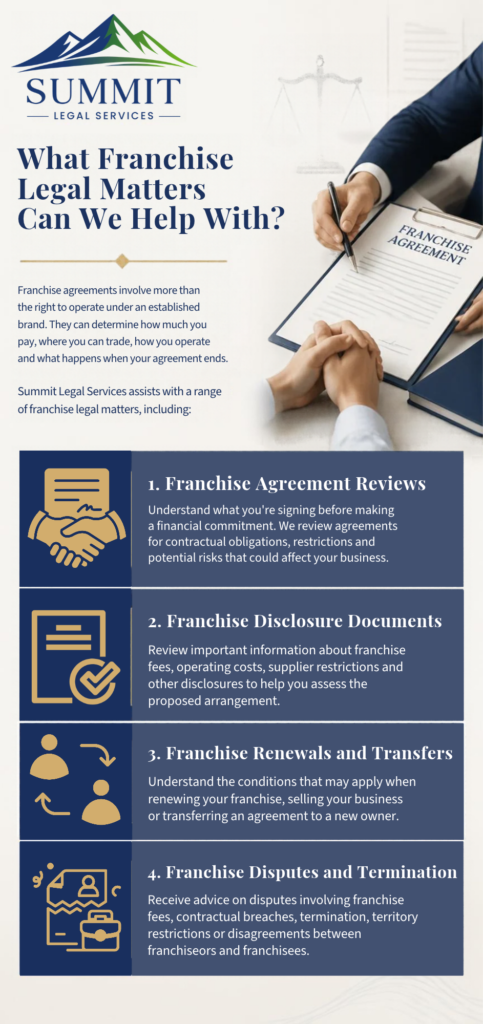
What Franchise Legal Matters Can Sumita Help With?
You need to understand what you’re signing before making a final financial commitment. Sumita will review agreements for contractual obligations, restrictions and potential risks that could affect your business.
- Franchise Agreement Reviews
- Franchise Disclosure Documents
- Franchise Renewals and Transfers
- Franchise Disputes and Termination
Before you sign, run through this checklist. It covers the questions to ask the franchisor and the documents worth reading closely. Bring it to your first meeting with a lawyer and you’ll get more out of the conversation.
Who Needs a Franchising Lawyer
Anyone buying, running or setting up a franchise. The advice you need depends on where you are:
- Buying your first franchise. You have the agreement and disclosure document in hand. You want to know what the fees really add up to, and what you’re locked into, before you commit.
- Already running one. Your renewal is coming up, there’s a disagreement over territory, or you’re thinking of selling. Each of these turns on what your agreement actually says.
- Franchising your own business. You’re turning your business into a franchise system. The legal documents and disclosure obligations need to be in place before you sign your first franchisee.
Before You Sign a Franchise Agreement
5 Important Questions Worth Asking
What will I actually pay? Have you accounted for royalties, marketing fees, fit-out costs and mandatory purchases?
Where can I operate? Do your territory rights protect you from nearby outlets or online competition?
What happens when the agreement ends? Can you renew, transfer or sell the franchise, and on what conditions?
What am I personally responsible for? Are there guarantees or financial commitments that could continue beyond the business?
Do the documents work together? Are the franchise agreement, disclosure document and commercial lease consistent with one another?
Frequently Asked Questions
Costs depend on the length and complexity of the agreement. Speak to our team for an estimate before you commit to anything.
Once the agreement is reviewed or the dispute is resolved, we're available for ongoing advice as your franchise relationship continues, including at renewal or transfer.
Summit Legal Services is a Melbourne-based boutique legal practice with its office in Mount Waverley. Founder and Principal Solicitor Sumita Dass is dual-qualified in Australia and India, with over 20 years' experience in commercial law, corporate governance, compliance, and regulatory matters, including senior in-house legal leadership roles across Australia and the Asia-Pacific region. That commercial background carries directly into franchising work, where the same issues, disclosure obligations, contract terms, and regulatory compliance, come up again and again.
Yes. This is the most common reason people contact us: getting the agreement checked and explained before they commit, not after a problem shows up.
Termination rights depend on the reason: cooling-off, breach, or the franchisor's "special circumstances" grounds. Each has different notice requirements under the Code, and disputes go through the Code's resolution process before court.